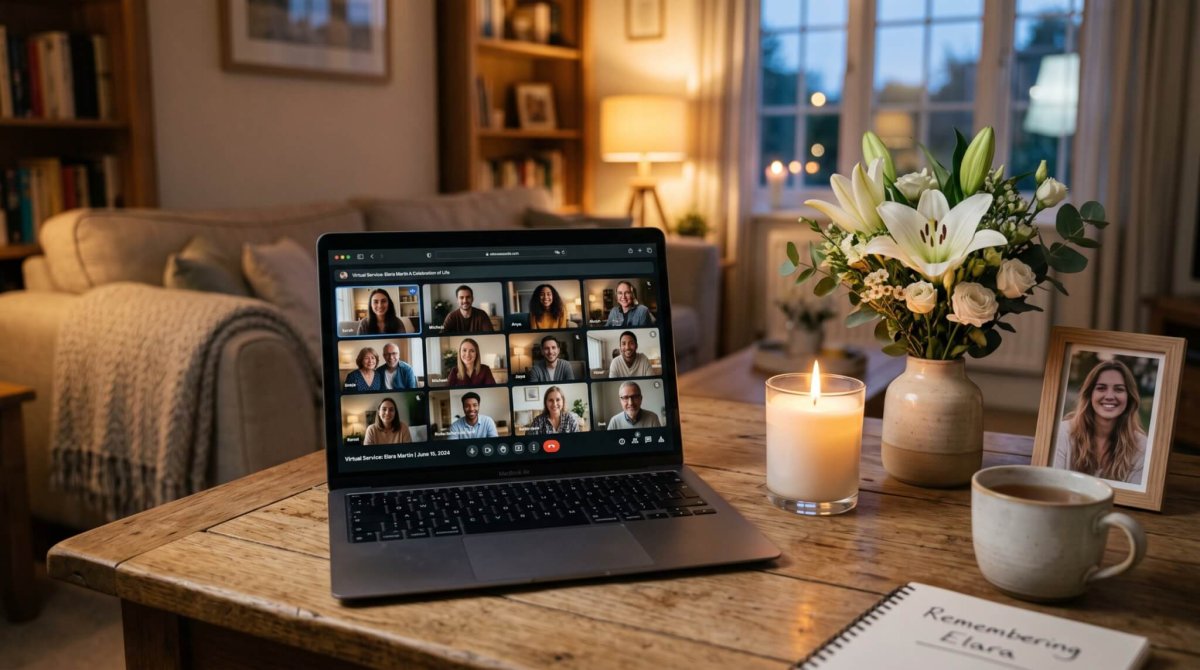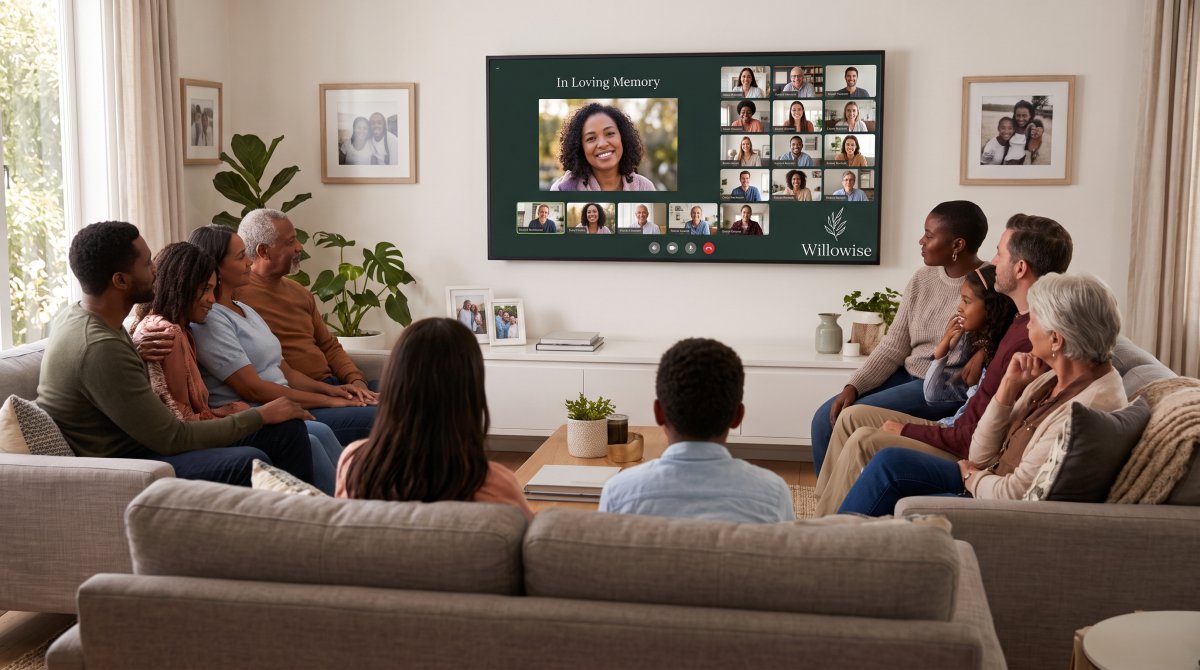
When someone you love dies, everything changes. The conversations you still wanted to have, the gatherings you imagined sharing together, the comfort of simply being in the same room. For families spread across the United States, distance can make that grief even heavier.
That’s where virtual memorial services come in. The right service helps your family gather, grieve, and honor your loved one together, no matter where everyone lives. This guide compares six virtual memorial services available to U.S. families, with a focus on remote attendance, family participation, and the memorial website features that keep your loved one’s legacy alive.
Willowise gives you a browser-based virtual memorial experience built around genuine connection, not passive watching. Every service on this list approaches online memorials differently, and the details matter when you’re planning something this meaningful.
Quick guide: 6 best virtual memorial services for families in the US
- Willowise: The best virtual memorial service for inclusive, browser-based gatherings with dedicated Memorial Concierge support and lasting memorial websites.
- GatheringUs: Zoom-based event planning with facilitator-led services for families who want structured ceremonies.
- Keeper Memorials: A memorial page builder with collaborative storytelling features and optional virtual event hosting.
- Virtual Memorial Gatherings: Livestreaming and fully online services with on-site videographer support for families wanting professional broadcast quality.
- Gather: A memorial website and coordination hub that helps families organize service logistics and share obituary details.
- OneRoom: Automated chapel-based streaming with hands-free camera setups, available through memorial service providers.
How we chose the best virtual memorial services for US families
Choosing how to honor your loved one online is deeply personal. We evaluated these services based on what actually matters to families navigating loss, not marketing promises or feature checklists.
- Remote attendance experience: Can your guests join without downloading apps or creating accounts? You shouldn’t have to troubleshoot technology while grieving.
- Family participation: Does the service let mourners speak, share memories, and interact with each other, or are remote attendees limited to watching a one-way stream?
- Memorial website quality: Is there a lasting online space where your family can return to revisit photos, stories, and the service recording long after the ceremony?
- Dedicated support: Does a real person guide you through planning, or are you left figuring out the technology on your own during one of the hardest moments of your life?
- Capacity and accessibility: How many guests can attend, and does the service work across devices and locations without technical barriers?
- Post-service features: Can you access a professionally edited recording, a downloadable program, and a guest book that preserves the condolences people shared?
The 6 best virtual memorial services for families in the US
1. Willowise: Best overall virtual memorial service for families
Willowise helps you create a deeply personal virtual memorial gathering that brings your family together from anywhere in the country. Every detail, from the slideshow to the order of service, is handled by a dedicated Memorial Concierge who walks you through the entire process with genuine care and patience.
What makes Willowise different is how your remote guests experience the ceremony. Attendees join through a browser link with no downloads or app installations required. Up to 500 logged-in devices can participate, which means your extended family, childhood friends, and distant colleagues can all be present together.
The service itself is fully interactive. Mourners can share remembrances, offer toasts, and participate in a moderated virtual reception immediately following the ceremony. Pre-recorded speakers receive professional video editing, including equalized audio levels and lower-thirds graphics displaying each person’s name and relationship to your loved one.
After the gathering, your family receives a professionally edited recording hosted online for on-demand viewing. And the memorial website Willowise creates becomes a lasting tribute, complete with obituary, photo gallery, guest book, and embedded slideshow, that your family can revisit for years to come.
Willowise features
- Dedicated Memorial Concierge: A real person guides your family through every step, from building the order of service to coordinating speakers. You never handle the technical details alone.
- Browser-based access for all guests: Attendees click a single link to join on any device. No software to install means fewer barriers for older family members or guests less comfortable with technology.
- Professional video editing: Pre-recorded eulogies and tributes are edited with equalized audio and lower-thirds graphics, giving every speaker’s message the respect it deserves.
- Moderated virtual reception room: After the ceremony, guests move into an open, unscripted space to connect. This is often the part of a memorial service that families remember most.
- Up to 500 logged-in attendee devices: Large families and wide social circles can all attend without capacity limits cutting anyone out.
- Personalized memorial website: A lasting digital tribute that includes your loved one’s obituary, registration, slideshow, photo gallery, and guest book, accessible from any browser at any time.
Willowise pros and cons
Pros:
- A dedicated Memorial Concierge handles all technical coordination, speaker training, and event facilitation so your family can focus on honoring your loved one.
- Fully browser-based access means every guest can join with a single click, regardless of age or technical comfort level.
- The memorial website serves as a permanent, interactive tribute your family returns to long after the ceremony.
Cons:
- Services are currently available for scheduling during weekday business hours, with an add-on cost for nights and weekends.
- Families planning very short, informal gatherings may find the full-service approach more comprehensive than they need.
2. GatheringUs: Facilitator-led ceremonies on Zoom
GatheringUs, now part of Keeper Memorials, offers facilitated virtual and hybrid memorial ceremonies run through Zoom. Their team assigns a dedicated planner who helps build the event program and coordinates speakers, music, and multimedia elements.
The service uses Zoom’s interactive features to allow guests to participate as eulogists, share memories, and chat during the ceremony. GatheringUs also provides speaker preparation sessions, A/V checks before the event, and a tech support hotline for guests who have trouble joining.
GatheringUs features
- Dedicated event planner: A planner works with your family to build a custom program covering speakers, music, and cultural traditions.
- Speaker prep and tech rehearsal: All presenters meet with the production team beforehand to check devices, lighting, and audio.
- Zoom-based interactive participation: Remote guests can be spotlighted as speakers, with moderated participation tools for muting and managing the flow.
GatheringUs pros and cons
Pros:
- The facilitated planning process guides families who are unfamiliar with virtual events through each step.
- Interactive Zoom features allow guests to actively participate rather than passively observe.
- The tech support hotline helps guests who have difficulty joining the call.
Cons:
- The service runs on Zoom, which requires guests to download the app or use a browser client that offers fewer features.
- Reception rooms are only available on the highest-tier package, limiting post-ceremony connection for families on other plans.
- GatheringUs recently merged with Keeper Memorials, and the combined service offerings are still being consolidated.
3. Keeper Memorials: Collaborative memorial pages with event options
Keeper Memorials focuses primarily on memorial websites where families can build a life story through photos, videos, and shared tributes. The free tier includes basic memorial page creation with a guest book, and a paid version unlocks additional storage and features.
Keeper also offers virtual memorial services through its connection with GatheringUs. The memorial page itself includes features like geolocation for resting places, family tree mapping, and story templates that guide contributors through sharing memories.
Keeper Memorials features
- Collaborative memorial pages: Multiple family members can contribute photos, videos, and written stories to build a shared tribute.
- Geolocation for resting places: Families can map cemetery or memorial locations so visitors can navigate directly.
- Story templates: Guided prompts help contributors share meaningful memories in a structured, visually appealing format.
Keeper Memorials pros and cons
Pros:
- The collaborative editing approach lets extended family members contribute their own photos and memories.
- Memorial pages include a structured life-story format that organizes content chronologically.
- The free tier gives families a starting point to create a basic memorial page without any upfront commitment.
Cons:
- Virtual memorial service hosting is handled through the GatheringUs partnership rather than being built into the Keeper platform itself.
- The free tier limits photo storage to a small number of images, which may not be enough for families with large collections.
- Keeper does not list a phone number for customer support on its website, which may be a concern for families needing immediate help.
4. Virtual Memorial Gatherings: Livestreaming with on-site videography
Virtual Memorial Gatherings provides both fully online memorial services and livestream memorial broadcasting with a professional videographer on-site at the in-person location. Their services are available from both the United States and Canada.
The fully online option allows guests and speakers to join from their homes, similar to other virtual services. Their livestreaming option places a professional camera operator at the physical ceremony and broadcasts to remote attendees through a personalized memorial page.
Virtual Memorial Gatherings features
- On-site professional videographer: A camera operator handles all equipment and monitors the broadcast in real time for quality audio and video.
- Personalized memorial broadcast page: The livestream is hosted on a dedicated page with the loved one’s photo, obituary, and an online guest book.
- Post-event recording: A private download of the recording is available as a digital keepsake, and streaming playback remains accessible for those who missed the live event.
Virtual Memorial Gatherings pros and cons
Pros:
- The on-site videographer handles all technical equipment, so the in-person setting does not need its own audiovisual setup.
- Real-time technical support is available for online viewers before and during the broadcast.
- The service operates from both the US and Canada, making it accessible for cross-border families.
Cons:
- The livestream option is primarily one-way, meaning remote viewers watch but cannot speak or interact visually with the in-person gathering.
- The standard virtual package limits registrations to 98 unique devices, which may not be enough for larger families.
- Add-on features like tribute video slideshows and additional speakers are priced separately from the base package.
5. Gather: Memorial coordination and obituary hub
Gather provides a memorial website that acts as a central hub for organizing and communicating service details. Families can post obituaries, share event information, collect RSVPs, and accept memorial donations through the page.
The platform integrates with memorial service providers and allows guests to leave guest book entries, upload photos, and share memories. Gather functions more as a logistics and information hub than a full-service virtual ceremony provider.
Gather features
- Obituary and event hub: Families post service details, directions, and RSVP tracking in a single location their guests can reference.
- Memorial donation collection: The page includes options for directing donations to charitable causes or a family fund.
- Guest book and photo sharing: Visitors can leave written tributes and upload photos to contribute to the memorial record.
Gather pros and cons
Pros:
- The platform serves as a centralized location for all logistical details related to the memorial service.
- Integration with memorial service providers means some families receive access at no direct cost.
- The donation feature gives guests a clear and respectful way to contribute in lieu of flowers.
Cons:
- Gather does not offer fully hosted virtual ceremony services with live facilitation or speaker management.
- Customization options for the memorial page design are limited compared to dedicated memorial website builders.
- The platform’s primary focus is information coordination, which means families looking for interactive virtual gatherings will need a separate service.
6. OneRoom: Automated chapel streaming for memorial service providers
OneRoom is a streaming service designed specifically for memorial service providers. Fixed cameras installed in a chapel start and stop automatically at scheduled times, so no staff member needs to operate equipment during the service.
Remote guests join through a link and can watch the ceremony live or access the recording later. OneRoom also generates captioned “Stories” from spoken tributes, turning eulogies into shareable audio keepsakes with text overlays.
OneRoom features
- Automated camera system: Cameras start and stop on a set schedule, requiring no operator during the service.
- Captioned Stories: Spoken tributes from the ceremony are automatically converted into shareable audio clips with captions.
- Guest support included: OneRoom provides direct technical support to online viewers, so the on-site team is not responsible for troubleshooting.
OneRoom pros and cons
Pros:
- The automated setup means on-site staff can focus entirely on serving the family in person.
- Captions and Spanish translation options make the viewing experience accessible to more guests.
- The recorded service is organized into chapters, allowing families to revisit specific tributes without watching the full recording.
Cons:
- OneRoom is only available through participating memorial service providers, so families cannot purchase the service independently.
- Remote guests watch a one-way stream and cannot speak, share their camera, or interact with in-person attendees.
- The service is designed for chapel-based ceremonies and does not support fully virtual gatherings where all participants join from home.
Comparison table: The best virtual memorial services for US families
| Service | Browser-Based Access (No Downloads) | Interactive Remote Participation | Lasting Memorial Website |
|---|---|---|---|
| Willowise | ✓ | ✓ | ✓ |
| GatheringUs | ✗ | ✓ | ✗ |
| Keeper Memorials | ✓ | ✗ | ✓ |
| Virtual Memorial Gatherings | ✗ | ✓ | ✓ |
| Gather | ✓ | ✗ | ✓ |
| OneRoom | ✓ | ✗ | ✗ |
What should you look for in a virtual memorial service?
The most important question is whether remote guests will feel like participants or spectators. Many services offer one-way livestreaming, which lets people watch from a distance but does not give them a way to speak, share a memory, or connect with other mourners.
If your family is scattered across different states, you likely want a service where everyone can actively participate. That means looking for features like moderated speaking opportunities, virtual reception rooms, and guest interaction tools that go beyond a chat window.
According to a 2026 study published in the European Journal of Psychotraumatology, grief processing benefits from meaningful interaction and structured remembrance, not passive observation. The service you choose should support that kind of active engagement.
How do memorial websites preserve your loved one’s legacy?
A virtual memorial gathering lasts an hour or two. A memorial website lasts as long as the memories do. These sites give your family a permanent place to revisit photos, read guest book entries, watch the recorded service, and add new memories as the years pass.
The strongest memorial websites include obituary space, photo galleries, embedded video, and a guest book that captures condolences, stories, and tributes from people who knew your loved one. When those elements are connected to the virtual service, the website becomes a living monument rather than a static page.
Willowise memorial websites are designed to serve exactly that purpose, giving your family a place to return whenever you need to remember, reflect, or simply feel close to the person you lost.
Why Willowise is the best virtual memorial service for US families
Willowise was built around a simple but powerful conviction: memorials are for the living. Every feature, from the dedicated Memorial Concierge to the browser-based guest access, exists to help your family come together and find the closure that distance might otherwise prevent.
Where other services offer livestreaming or memorial pages, Willowise connects both into a single, cohesive experience. Your guests don’t just watch a ceremony. They participate in it, share memories during the reception, and return to a beautifully designed memorial website that preserves everything for years to come.
If you’re planning a memorial for a loved one and your family is spread across the country, reach out to Willowise for a free consultation. It’s our deepest privilege to help you honor a life well-lived.
FAQs about virtual memorial services
What is a virtual memorial service?
A virtual memorial service is an online gathering where family and friends honor a loved one through a live or pre-recorded ceremony. Guests join from their own devices, and the service can include eulogies, slideshows, music, and interactive participation. Willowise virtual memorial gatherings support up to 500 logged-in attendees and include a moderated reception for open sharing.
Do guests need to download software to attend a virtual memorial?
It depends on the service you choose. Some providers run their ceremonies through Zoom or other apps that require downloads. Willowise uses a fully browser-based approach, meaning your guests click a link and join from any internet-connected device without installing anything.
Can remote guests participate in a virtual memorial, or do they just watch?
This varies significantly between services. One-way livestreams only allow viewing. Willowise virtual gatherings are fully interactive, letting remote guests share memories, offer toasts, and connect in a virtual reception room following the ceremony. That level of participation helps mourners feel genuinely included rather than like distant observers.
How many people can attend a virtual memorial service?
Capacity depends on the provider. Willowise supports up to 500 logged-in devices per gathering, which allows hundreds of family members and friends to attend. Other services range from 98 to unlimited, depending on the plan and platform they use.
Is a memorial website included with virtual memorial services?
Not always. Some providers focus exclusively on the live ceremony and do not include a lasting memorial website. Willowise includes a personalized memorial website with every service package, giving your family a permanent online space to revisit the recorded ceremony, browse photos, and read guest book messages.
How much do virtual memorial services cost?
Costs vary depending on the provider and the level of service included. Most services offer tiered packages with different features. Contact individual providers directly for current pricing. Willowise offers a free consultation to discuss your family’s needs and match you with the right package.